
The Lunchbox Was Never the Problem
There are foods that arrive in the world with confidence. They are plated, written about, photographed, named properly, given origin stories, wine pairings and rooms that know how to hold them.

And then there are the foods that travel differently.
They move quietly, wrapped in foil, packed into plastic tubs, carried across borders in suitcases and memories. They sit in pressure cookers, in reused jam jars, in old ice cream tubs full of frozen curry. They are cooked by women who do not call themselves chefs, but know exactly how far to take the onions before they burn.
They live in dawats, in kitchens thick with steam, in aunties shouting over each other while feeding everyone before they feed themselves.
This is the food I grew up with.
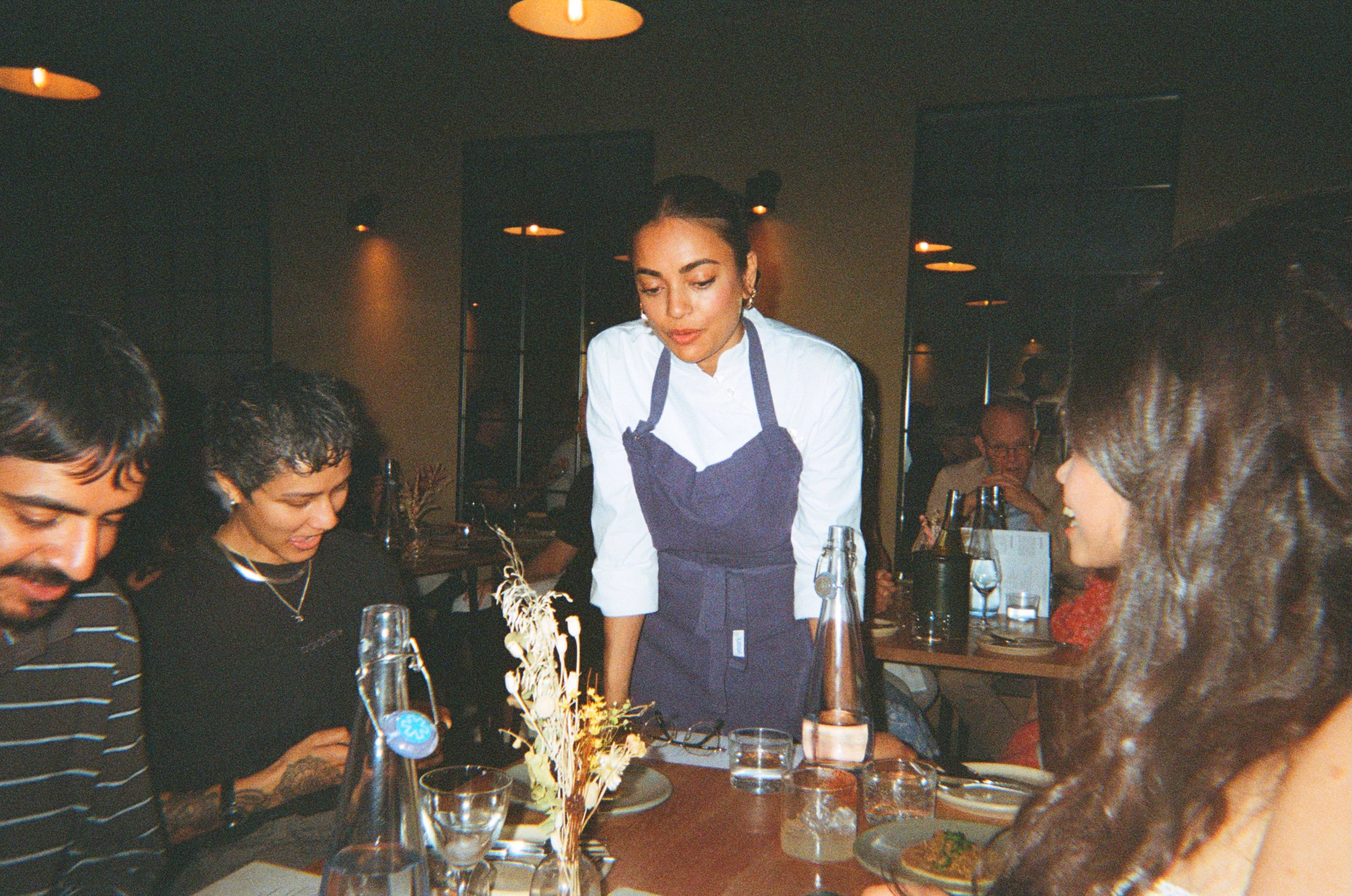
Bangladeshi food. Sylheti food. Food from homes where flavour was never shy, but often had to be.
It was the kind of food that made you nervous to open your lunchbox at school. The kind of food that announced itself before you had a chance to explain it. Mustard oil, dried fish, shatkora, sour broth, stained fingers, rice eaten with hands. Food that was completely ordinary to us and somehow still treated as foreign by everyone else.
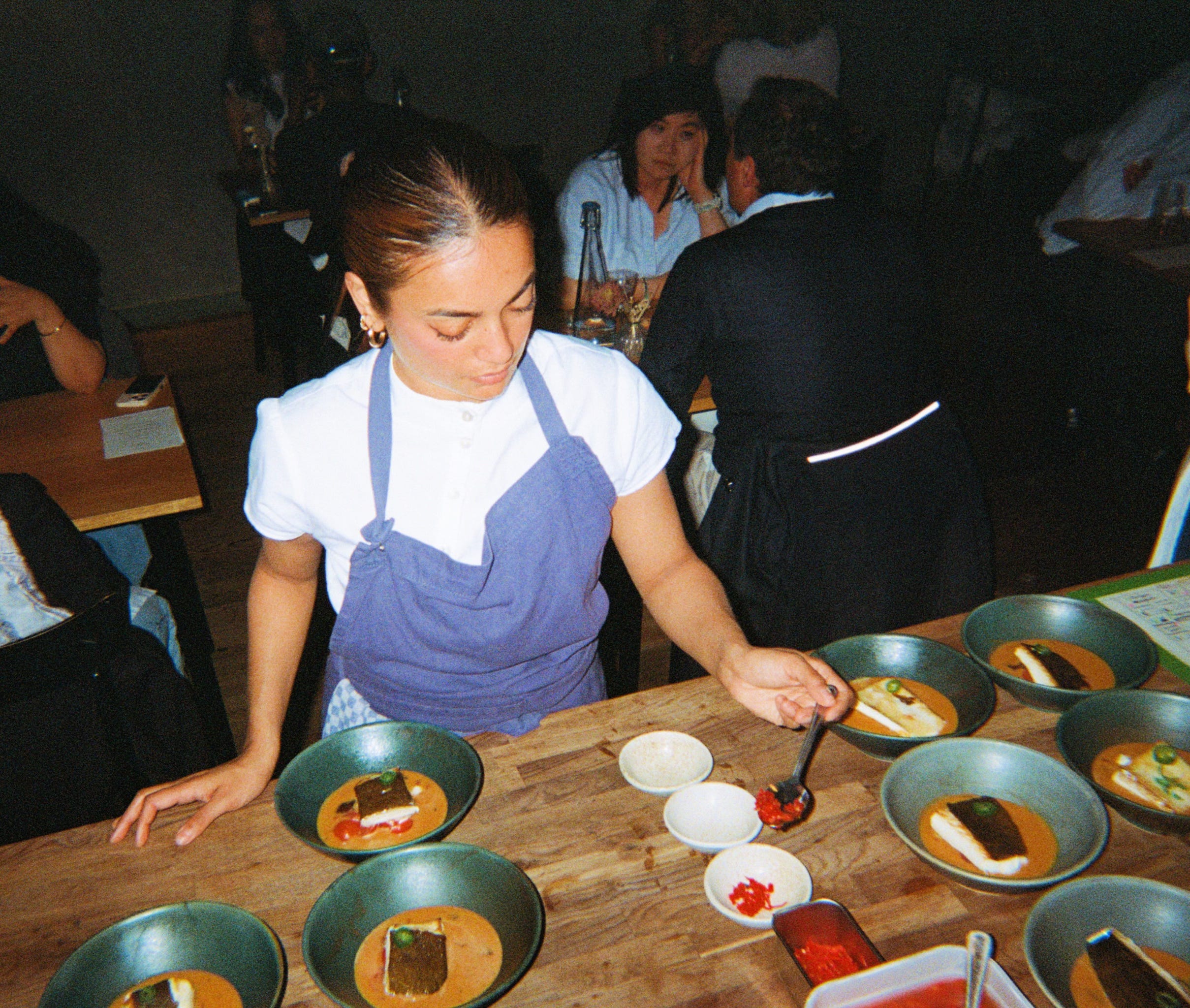
So to stand years later in Carousel, on Charlotte Street in central London, one of London’s most respected guest chef spaces, serving tenga shatkora fish broth, duck kosha on paratha, shutki, fuljhuri pitha and rasmalai ice cream, felt surreal.
Not because the food had suddenly become beautiful. It always was.
But because, for once, it was being looked at properly. And people were crying. Not because it was fancy. Because it was familiar. Because it was the kind of familiar that a lot of us had to pretend was not precious for a very long time.
There is an old shame that sits around immigrant food, especially food that is pungent, oily, sour, fermented, fishy, loud, stained yellow, eaten with hands, made by women, made without recipes, made in homes that were never trying to impress anyone.
You learn early that some food is restaurant food and some food is home food. Somehow, home food becomes smaller in the eyes of the outside world. Less polished. Less serious. Less worthy of linen napkins, wine glasses and a dining room full of people paying attention.
But the truth is, home food is where the real technique is.
The technique is knowing how far to take the onions before they burn. Knowing how much mustard oil is enough to wake something up without punching everyone in the face. Knowing what shatkora does to fish. Knowing what sourness can do to a broth. Knowing what dried fish paste can become when it is handled with care instead of apology.
The technique is inheritance.
I also think a lot about how we got here.
For a lot of Bangladeshis in Britain, especially Sylhetis, food was not first presented as art or expression or identity politics. It was work. It was survival. It was a way to make money in a country that did not always want you there.
East London in the 1970s was not some romantic multicultural postcard. It was racist. It was violent. People were trying to build lives while keeping their heads down. Families were dealing with housing discrimination, street attacks, National Front intimidation and the daily exhaustion of being treated like they were foreign in a place that depended on their labour.
I remember sitting at the dinner table in our house in East London once, listening to my auntie tell us a story so casually that it almost made it worse.
She was talking about when they were younger, and how skinhead, neo-Nazi racists had thrown bricks through their living room window. One of the bricks came straight through the glass, into the house, into the place that was supposed to be safe.
And it was winter.
They did not have the money to fix it properly. They could not just call someone and replace the glass. So they covered it up with cardboard and bits of wood and carried on.
That image has never really left me. A brick through the living room window. Cold air coming into the house. Cardboard where glass should be. Children in the house.
And the part that hurts the most is not even the violence itself. It is the way she told it. Not dramatically. Not looking for sympathy. Just like, this is what happened. This is what life was like then. This is what we had to get through.
There is something devastating about that kind of casualness.
Because it tells you how normal it must have been. How much people swallowed. How much they had to keep moving through. How many violations of home, body, safety and dignity just became part of the weather.
And when I hear stories like that, something in me shifts.
It makes me feel like I cannot just do something small with the privilege I have now. I cannot just be grateful to be in the room and keep my head down. I cannot recreate another version of the same system where Bangladeshi people are in the background, cooking the food, doing the labour, making the culture happen but still not being fully seen.
And I say that with so much respect for the curry houses.
Because the curry house was survival. It was genius. It was strategy. It gave people jobs, money, structure and a way in. It helped families build lives in a country that was often hostile to them. It turned fear into rent money. It turned racism into something people could somehow work around.
But something gets lost in that translation.
When food has to become acceptable, it often has to become less specific.
The region disappears. The village disappears. The women disappear. The home disappears. The sour fish broth disappears. The bitter citrus disappears. The shutki disappears. The weirdness disappears. The lunchbox smell disappears.
Or maybe it does not disappear.
Maybe it just goes quiet.
Maybe it waits in the house. I know that I come after all of that.
I come after the brick. After the cardboard window. After the aunties and uncles who kept going. After the men who worked double shifts. After the women who held the home together. After the people who learned how to make themselves acceptable because being too visible could be dangerous.
So the work now has to be different.
Not better. Different.
It cannot only be about making our food understandable to other people. It cannot only be about fitting into someone else’s idea of what “Indian food” or “curry” should be. It cannot only be about being grateful to be allowed in.
It has to be about being specific. Being visible. Being loud when the food is loud. Being emotional when the food is emotional. Being Sylheti, Bangladeshi, East London, diaspora, messy, refined, funny, angry and soft all at once.
Because stories like that are why I cook the way I cook.
They are why I do not want to flatten the food. They are why I do not want to hide the shatkora, the shutki, the mustard oil, the sourness, the bitterness, the things that smell like home.
They are why Carousel felt like more than a residency to me. Because yes, it was dinner. But it was also a brick coming back as a plate of food.
It was cardboard over a broken window becoming linen, wine glasses, broth, paratha, pitha, and people crying at the table because they were so moved.
It was me trying, in my own small way, to move the dial a little further.
For Carousel, I did not want to make Bengali food palatable by sanding off all the edges. I did not want to make it quieter. I did not want to translate it until it became unrecognisable. I wanted to bring the things that actually made me feel something.
Sylheti food is not always gentle. It can be sour, deep, bitter, funky, fragrant, hot, comforting, medicinal and emotional. It has a particular kind of honesty to it. It does not always arrive looking for approval. That was the bloody point.
The duck was not there because “duck taco” sounds cute on a menu. It was there because kosha, slow-cooked meat, achar spices, paratha, citrus and herbs all make sense to me together. It makes sense in my mouth before it makes sense in English.
The tenga shatkora broth was not there because I wanted to do a “light fish course.” It was there because sour fish curry is one of those dishes that lives in the body if you grew up around it. The sharpness of shatkora, the softness of the fish, the heat of green chilli, the clean pull of citrus, tomato and broth. It is comforting without being soft. Medicinal without being clinical. It has that very Sylheti way of feeding you back to yourself.
The rasmalai ice cream with fuljhuri pitha was probably the thing that made me the most emotional. Because it was playful, yes, but it was also so specific. Cardamom, rose, saffron, milk, crunch. The flavours of a dessert table, of celebration, of someone bringing out something sweet even when everyone says they are full.
What moved me most was watching people recognise themselves in the food.
Some people did not have the language for it. They just went quiet. Some people came up to me afterwards and told me it reminded them of their mum, their nani, their childhood, a house they had not been back to in years. Some people cried because they had never seen this kind of food held like that before.
And I get it. Because I was also seeing it that way for the first time too.
Not the food itself. I know the food. I know the smell of it in my clothes. I know the way it sits on the stove. I know the way you eat standing up in the kitchen before anyone arrives. I know the way Bengali women feed people like it is both love and labour and survival.
But seeing it in that room, under those lights, with people leaning in, asking questions, taking it seriously, letting it move them?
That did something to me.
It made me think about all the things we were taught to be embarrassed by. The lunchboxes. The smell. The oil. The fish. The aunties. The hands. The mess. The fact that our food did not come with a clean origin story or a neat little explanation.
It also made me think about distance.
I have been away from home for almost ten years now. London, Berlin, Australia, Vietnam, all these places that have shaped me and stretched me and made me into a person who can walk into rooms I do not think my grandparents could have imagined.
But the further away I get, the closer I want to be to the food.
I think distance does that. It strips away the noise. It makes you ask different questions.
What did we actually eat?
What did my mum know without writing it down?
What did my nanu cook that I never thought to ask about?
What is Sylheti food when it is not being flattened into “curry”?
What have I inherited without knowing it?
What have I lost because I was too busy trying to leave?
And that is me. You spend part of your life trying not to be reduced to where you come from and then another part trying desperately to find your way back to it.
Maybe that is what Roti Mami is really about.
Not elevation. I actually hate that word. Our food was never low. Maybe it is about placement?
Putting the food somewhere people are forced to meet it properly. Not as a side note. Not as “curry.” Not as something flattened into one generic brown thing. But as food with regions, memory, technique, humour, grief, specificity and attitude.
Food from Sylhet. Food from East London. Food from the diaspora. Food from women who probably never called themselves chefs but could cook circles around most people. Food made possible by curry houses, by survival, by people who kept their heads down so some of us could eventually lift ours.
Carousel was special because it made me realise that the work is not just cooking the food. It is undoing the flinch. The flinch that says maybe this is too much. Too strong. Too homey. Too brown. Too foreign. Too emotional. Too personal.
But maybe the thing you are scared people will judge is the thing that will move them the most.
Maybe the lunchbox was never the problem.
Maybe the room just was not ready yet.
The track I’ll leave you with today is Novacane by Frank Ocean.
Love,
Rez x